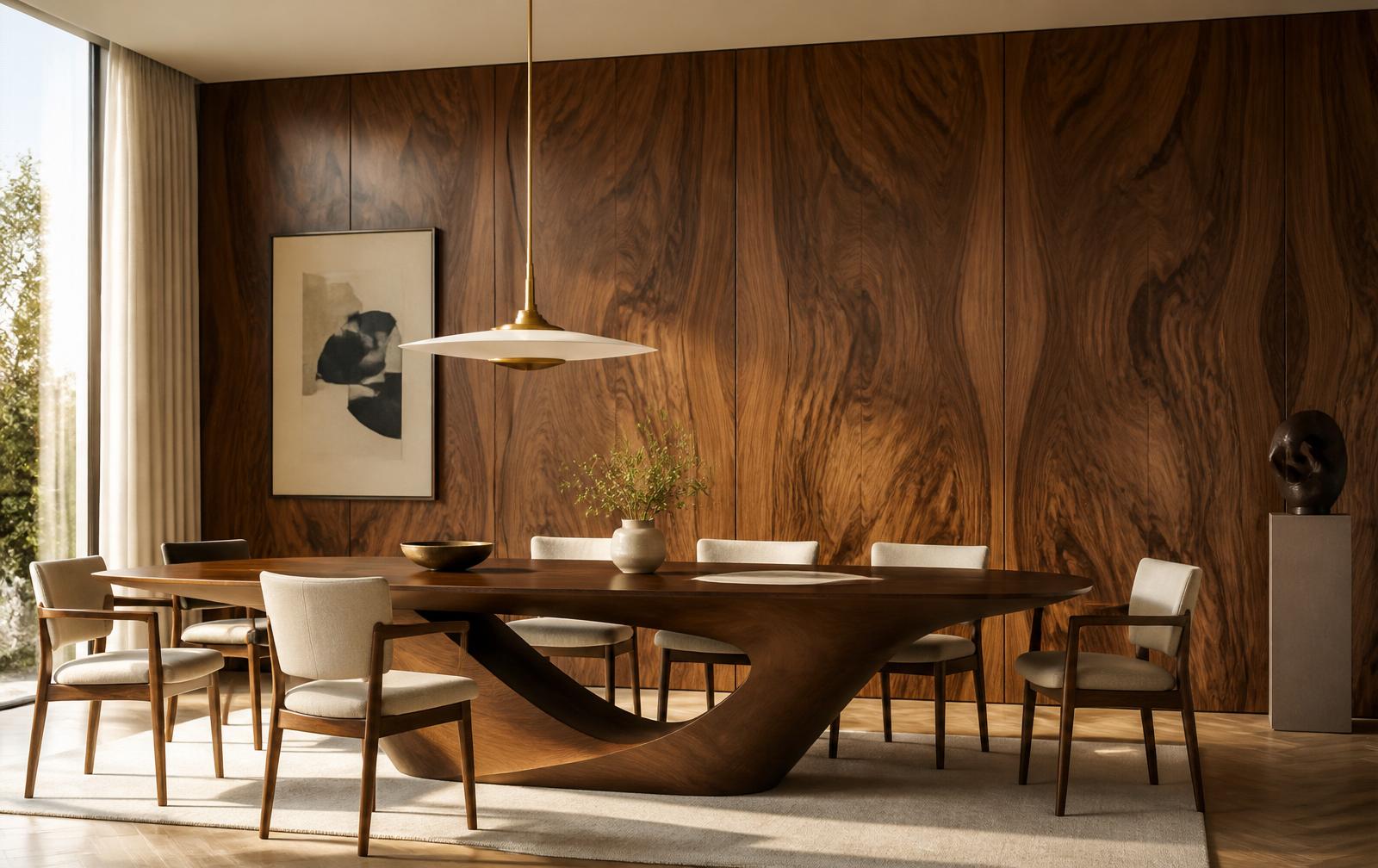
Veneers vs. Solid Wood: Understanding the Benefits of Ranger Veneers
Veneer or solid wood is one of the first questions on any project — and one of the most misunderstood. This is a clear comparison of the two, to help you understand the advantages of choosing Ranger veneers.
Veneer and solid wood, defined
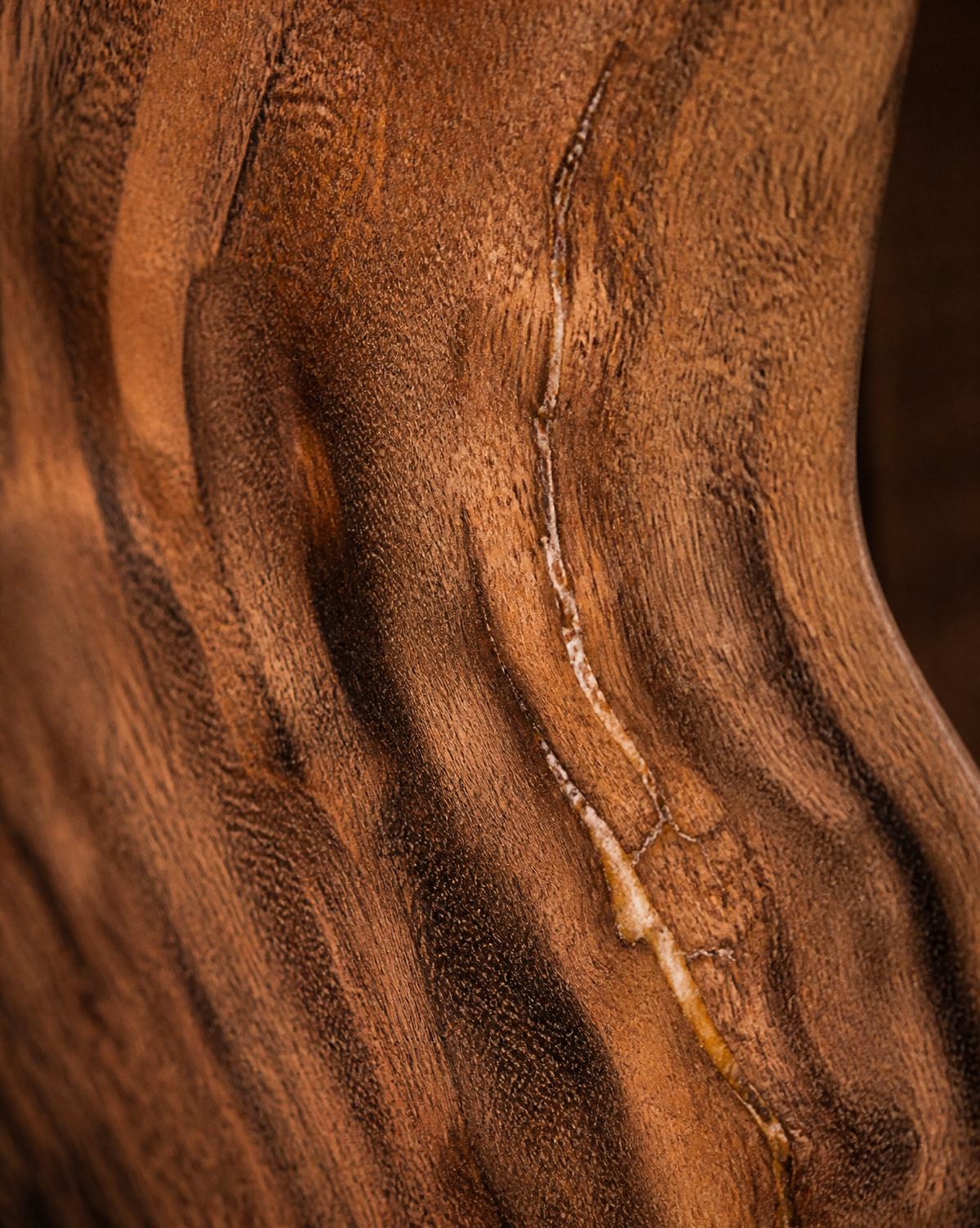
Solid wood is exactly that — timber used in its full thickness, milled into boards. A veneer is a thin slice of the same natural wood, bonded to a stable substrate. Both are real wood and both carry genuine grain; the difference is how the material is used, and how it behaves once it is in place.
The benefits of veneer
Veneer's advantages are practical and add up quickly. It is more cost-effective, because a single log yields far more surface as leaf than as board. It is more sustainable, for the same reason — more finished interior from less forest. And it is more versatile: the same species and match can be carried across walls, doors and furniture, on a surface that stays flat and stable where solid wood would move with the seasons.
“Veneer is not an imitation of solid wood. It is real wood, used more efficiently — and often more beautifully.”
Clearing up the misconceptions
The most common myth is that veneer is a cheap substitute or a printed imitation. A quality natural veneer is neither — it is genuine timber, sliced from a real log, with the grain and tone to prove it. Specified and finished well, it is durable, repairable and enduring, not a compromise made to save money.
What clients tell us
In practice, the choice tends to settle itself once a client sees the material in a finished room. The consistency of the match across a whole project, the stability of the surface over time, and the sheer range of species and tones available are what turn the theoretical comparison into a confident decision.